Forcepoint
Forcepoint™, formerly Raytheon|Websense, together with the Government Technology Research Alliance (GTRA)
Government Technology Research Alliance & Council
Council, Delegates, CXO Leaders, Technology Solution Providers
Intimate vendor-neutral communities where CXO's collaborate on innovative technologies that drive ROI and move the industry forward

GTRA Provides Technology Companies & Solution Providers a unique advantage to get more face-time and access to our federal council, speakers, and delegation. We offer companies the opportunity to host your own GTRA local D.C. events, meetings, dinners, briefings, receptions, training, social happy hour, etc.
Why Do Companies like LendUP Partner with GTRA to Produce Government Events?
Brand Recognition
GTRA Extensive Network
ROI
Networking Happy Hour:
Half-Day Event Agenda:
Full-Day Event Agenda:
Next Steps to Customizing Your GTRA Event:
1. What are your goals – thought leadership, brand awareness, face-time networking, product demo, new launch, research/development?
2. Determine your type of event: Luncheon, Happy Hour, Briefing, Workshop, Live Demo, Panel, Think-Tank, Boardroom, Training
3. Collaborate with your sales/marketing teams and GTRA to determine your event “topic/title/theme”
4. Select date – Thursday’s are recommended, avoid holidays/breaks/large competing events (See available months below)
5. Establish who you want GTRA to invite – Small and exclusive? Mass invitation to all subscribers? Council-only? Your own list?
6. Work with GTRA to create approved invitations for us to send
Your Company Will Need To Provide:
Direct Costs:
GTRA Provides:
Months Available:
Discounts Available:
*6-Event Series saves you 30% off each event
*3-Event Series saves you 10% off each event
To schedule a call to discuss your local D.C. Event please contact: Laura Child
Marketing and Events Coordinator, GTRA (202) 815-7406
Publications, Case Studies, News and More.
Forcepoint™, formerly Raytheon|Websense, together with the Government Technology Research Alliance (GTRA)



Dr. Alenka Brown President & Chief Scientist, Dr. Joe McClure VanHoozer Chief Subject Matter Expert, Mr. Jason Christman, MS, CISSP,…

by: Dr. Alenka Brown Senior Managing Member McClure, Brown, & Associates LLC Jason Christman MS, CISSP, PMP McClure, Brown, &…
June 29, 2015 – Gettysburg PA – The Government Technology Research Alliance (GTRA) announced the public and private sector…

Top Government IT CIO’s Convene to Collaborate on Security, Big Data/Analytics, Mobile and EA/Infrastructure GTRA.org – March 23,…
and featured members.
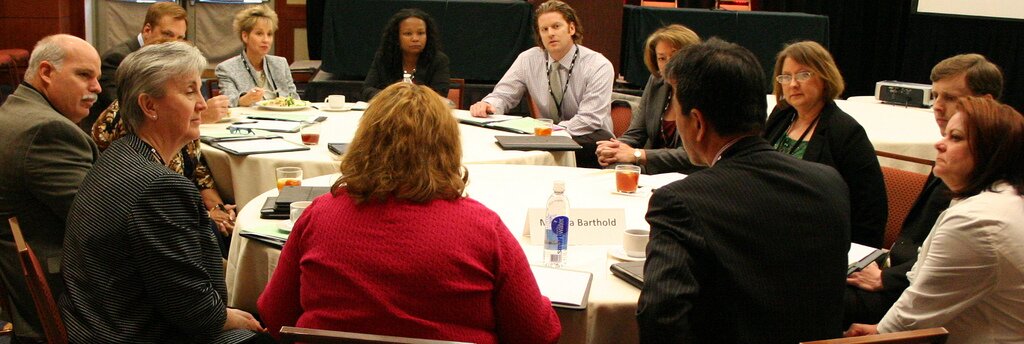
GTRA is a unique forum, bringing together many senior, technically focused, executives in a single interactive setting of roundtable and one-on-one discussion. Their unique version of a Summit format allows commercial and government IT Leaders to come together and discuss information management solutions to their shared mission critical challenges. This non-sales environment builds trusted, long-term relationships and allows the sharing of requirements, architectural frameworks, and valuable insights from an operational perspective.
As an AFCEA member I think this is very impressive and feel appreciative for forums like GTRA that are facilitating to provide outstanding opportunities for collaboration and convergence of ideas, concepts and thought leadership. GTRA through enhanced collaboration with GITEC has opened the doors in bringing Government and Industry together. It will take synergies such as these to affect positive organizational and national progress in cyber security awareness, knowledge and education through people working together.
CIO, ASC (LCMC), Wright-Patterson AFB, Air Force
I’ve been at this 20 years and this was the best conference that I’ve been to. GTRA has a young aggressive staff who is able to pull in key people and the roundtable concept worked very well. The government executives were committed to the process as well as the solution providers. I spent major individual time with all participants! GTRA did a tremendous job! We closed one contract within the first few months and have a seven figure deal that is also going through!
I’m very impressed with the value from the GTRA Council Meeting. First and foremost is an excellent collaboration opportunity across federal agencies. The presentations I’ve attended were not only very interesting but very relevant to what we’re doing in our agency. I certainly plan to follow up with the presenters and use their briefing material to further the collaboration with what we’re doing with the other agencies. I’m very struck with the positive opportunity it represents for collaboration.
Deputy Chief Information Officer, Office of Enterprise Development, VA
GTRA is probably one of the only events I’ll attend from here on out. If I am going to spend time and money on a conference, this would be it! We will definitely be back next year! This is by far the best conference I have attended – dealing with high decision makers has been great. I loved the roundtable discussions because you get to sit down and talk to customers about their problems. This is far better than a regular conference where the government officials just pick up a brochure and then leave.
Director of Sales, TopQuadrant
GTRA has consistently continued to do what the past two Presidents have agreed is a top priority: bringing a diverse grouping of ‘disciplined’ from across the government. ‘GTRA is a vehicle to help realize our administration’s vision for government performance! GTRA preceded Obama and no one can ride the coat tails! If Kelly Yocum, Co-founder & Executive Director, GTRA, sees it and says it, it has to come true!”
Professor of Systems Management, Information Resources Management College, National Defense University (NDU)
FAR, FAR, FAR, better environment that is conducive to feds and private sector feeling comfortable working together – awesome opportunity to meet and build relationships with key thought leaders.
Director, PPC
This is definitely the best conference event I have been to. “This small intimate setting is definitely the best. At most conferences you hear one speaker and then 400 vendors try to speak to them and give their their business card. It’s nice to have the quality face-time. GTRA runs a well-oiled ship!
CTO, HBGary
We get about 50 phone sales calls a week about other industry events – each telling us they have the greatest show out there. I myself have been to a number of different events and have found GTRA to be the best event I’ve ever been to. The event had the highest quality of attendee to vendor ratio, better than any other event that I’ve ever attended. GTRA did a great job making sure that all our priority meetings were met and that we were able to meet with additional executives that we weren’t scheduled to meet with. I would definitely recommend it to my peers!
GM, Systinet Federal
GTRA brings in the ‘cream of the crop’ in the government and industry! No other event provides us the opportunities and access to high level government executives that GTRA does. For three days we get to connect with people and foster relationships through roundtables, casino night networking and strategy sessions. GTRA gets the right people; the number of high ranking officials is amazing!
Customer Service Director, GSA
The GTRA events are my professional highlights of the year. I really enjoy talking and exchanging ideas in with those I don’t normally get to work with. The nonDoD government has such a refreshing view on problems and solutions that I can’t help but bring back more ideas than I can even begin to implement.
The location was superb, but the friendships and time together was the best.
I love the fact that you know us by name and we’re considered friends!Senior Principal, Information Systems Engineer, MITRE
The boardroom style is a brilliant idea-much better format than the exhibition hall and you get to hear other ideas-it works the way it’s supposed to!
Chief Technology Officer for Information and Network Assurance, Office of the Assistant Secretary of Defense Networks and Information Integration, Defense (Speaker)
The face-to-face collaboration and roundtable discussions allow for a more interesting interaction and a chain of networking. When you throw everyone in a room, it’s too broad and not effective. This is my first event, but it seems to be very efficient. The personal attention of the GTRA staff throughout the conference was most appreciated. Don’t ever lose the personal touch! It is a great differentiator for your organization to raise you above the pack!!
Enterprise Architect, Office of the CIO, Social Security Administration
I hope your ears burn every time I mention your group to people who can’t get out of their own way. You guys are an awesome display of entrepreneurs, courage and most importantly…excellence.
Customer Service Director, Federal Acquisition Service, GSA
GTRA provides valuable collaboration and networking with executives from across the federal government and commercial business partners in a non-hostile, non-political environment.
Chief Architect and Principal Director, Deputy CIO, DoD
Of the 30 events that I have attended this year, GTRA is by far the best organized event and the technology presentations surpass all others!
Senior Computer Scientist, NIST